What Is a Steel Villa and Why Should You Choose It?
What Is a Steel Villa?
A steel villa is a residential structure whose entire or major load-bearing skeleton consists of steel profiles, designed and produced within the framework of engineering calculations. Raw steel is cut and assembled at the factory before arriving at the construction site; therefore, steel villas offer both fast assembly and high quality control advantages.
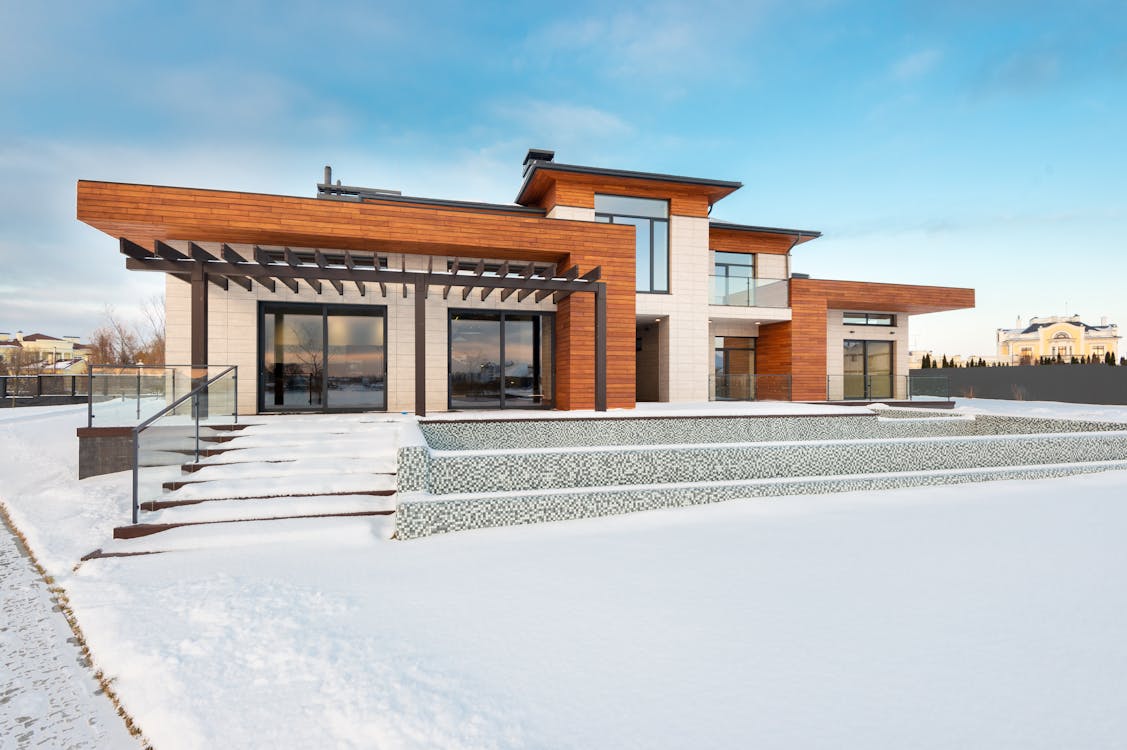
The main feature that distinguishes steel villas from other types of structures is that the load-bearing system is made of steel. The exterior facade, interior partitions, and cladding materials can be designed with a wide variety of options (brick, wood, glass, composite panel, etc.) according to preference and budget; therefore, steel villas are an architecturally extremely flexible type of structure.
Steel Structure Systems
Heavy Steel Frame
In this system, which uses wide-flange steel profiles such as HEA, HEB, or IPE, large spans and high floors can be easily achieved. It is preferred for the load-bearing skeleton of large residences and villas, as well as industrial structures.
Light Steel Frame (LSF)
This system, where thin galvanized profiles are placed at frequent intervals, is advantageous in terms of thermal insulation and acoustic comfort. It is a common solution for medium-sized villas; it is more cost-effective compared to heavy steel.
Hybrid Systems
This is a system where heavy steel is used as the main load-bearer and LSF profiles are used together in intermediate elements. It combines the advantages of both systems; it is preferred in large-span luxury villas.
7 Main Advantages of Steel Villas
- Speed: The steel skeleton produced in the factory is assembled in a short time; construction time is 40–60% shorter compared to reinforced concrete.
- Lightness and seismic safety: Steel structures are much lighter than reinforced concrete and effectively dissipate earthquake energy thanks to their ductility.
- Large span capability: Thanks to the column-beam systems, spans of up to 8–12 meters are possible, enabling wide interior spaces without load-bearing walls.
- High precision: Profiles cut by CNC machine in the factory environment are produced with millimeter tolerances; the risk of faulty manufacturing is minimal.
- Environmental sustainability: Steel is a 100% recyclable material; much less waste is generated during the construction process compared to concrete waste.
- Flexibility and expandability: Adding additional modules or floors to the existing structure is much easier compared to reinforced concrete.
- Moisture and fire management: Corrosion can be prevented with galvanized or painted steel profiles; fire resistance can be increased with special coatings against fire.
Disadvantages and Solutions
| Disadvantage | Solution |
|---|---|
| Thermal bridge risk | Use of thermal break profiles |
| High initial cost (for heavy steel) | Balanced total cost with long-term maintenance savings |
| Fire sensitivity | Solved with drywall cladding or fire retardant paint |
| Acoustic issues | Resolved with mineral wool fill and double-layer drywall |
Comparison with Reinforced Concrete
| Criterion | Steel Villa | Reinforced Concrete Villa |
|---|---|---|
| Construction Time | 4–7 months | 12–18 months |
| Structure Weight | Light | Heavy |
| Seismic Performance | High (ductile) | Medium-high (design-dependent) |
| Recyclability | 100% | Limited |
| Architectural Flexibility | Very high | Medium |
Conclusion
A steel villa is an ideal construction solution for those looking for fast construction, high seismic safety, wide architectural flexibility, and long life. As Tunahanyeniçeri, we build your dream villa with our experienced team in heavy steel, light steel, and hybrid systems.
Tunahan Yeniçeri
İnşaat Mühendisi
As a civil engineer, I provide expert engineering services for prefab, steel and reinforced concrete villa projects.